Showing posts with label Make It Yourself. Show all posts

Wednesday, May 11, 2011

How to: Make a Niddy Noddy


Since getting my new spinning wheel I've wanted to make a niddy noddy.  You can pick up a niddy noddy up for around $20.00 but I thought if you can make one for less why not.  This is a very basic niddy noddy that Lewie helped me make.

Materials:

Large 1/2" wooden dowel
Hand saw or table saw
Two wood screws
Drill

Directions:

1. Cut your wooden dowel into three pieces: two 12" pieces and one 17" piece


2. Using your screws and drill, attach the 12" pieces to the ends of the 17" piece in opposite directions.
3. That's it!  You can then sand down the edges if you need to and or stain it.

Because the dowel is 1/2" in width the whole niddy noddy will measure 18" which is half a yard so one time around with yarn will measure 1 yard.

Now that I have a niddy noddy I can make skeins with the yarn I've been spinning.  I put the first batch on and measured it last week:  about 66 yards total.  I need over 300 yards for the pattern I want to knit!  I better get spinning!

Monday, April 4, 2011

Make It Yourself: Wrapping up...


March is over and so it Make It Yourself.  I had a lot of fun coming up with things that I use a lot or needed that instead of buying I could make myself.  I believe it's so important to invest your time in things like this to save money, the planet and better your health.  Thanks to my guest bloggers:

Susy from Chiot's Run

Here are some more homemade and handmade guides if you are interested in more things to make:

I own the book Homemade by the Editors of the Reader's Digest.  It does have some strange things in it (like beer shampoo) but it also as a few things that work and a lot of diy food recipes.

Homemade: How-to Make Hundreds of Everyday Products Fast, Fresh, and More Naturally

This is one of my favorite books:  County Wisdom & Know-How by the Editors of Storey Publishing's Country Wisdom Boards.  It's a huge book, could be a coffee table add, but it has tons of useful information in it and a lot of diy tips and recipes from everything to soap to birdhouses. 

Country Wisdom & Know-How

Of course, every diy home needs a copy of this book:  Ball Complete Book of Home Preserving.  Want to make your own ketchup?  Mustard?  Relish?  This book has everything.  The recipes are for canning but you can also make small batches with it.  It is really like a bible in our house.  Every page is marked or written on.  A must. 

Ball Complete Book of Home Preserving

Martha books are always close by to inspire me to create homemade presents.  That's something we really try to do in our house. A homemade gift really means something special.  There are some great ideas in her Encyclopedia of Crafts book as well as her newest one, Encyclopedia of Fabric Crafts.  

Martha Stewart's Encyclopedia of Crafts: An A-to-Z Guide with Detailed Instructions and Endless Inspiration
 
Those are just a few of the books that I turn to when I need to buy something and see if I can make it instead.  Do you have any that I should add to the collection? 

Now it's April and I'm looking forward to getting back into the blog swing of things.  I have several exciting announcements to share this month, garden updates, bees updates, and new products to share from Ash Tree Organics.  Stay tuned! 

Thursday, March 31, 2011

Make It Yourself: Homemade Bread


Here is a picture of some bread I attempted to make last year:


So sad, it didn't rise. I have bread problems. This is another thing I'd love to start making in our house instead of buying.  The nice whole-wheat-big-slice-sandwich-bread we like is pricey!  Yet, the few times I've tried to make nice bread it hasn't worked.  I can do quick breads and rolls but that's about it.  Emma from City Roots, County Life seems to have the whole bread making thing down.  It's hopeful to see other people try and succeed in bread making, perhaps I should try it again?  She's joining the Make It Yourself month with the last post in the series all about bread.  I love what their blog is all about:  "First, it is the story of our transformation from a suburban family to a country family.  But more importantly, we want this site to be both a resource and an inspiration to others who are thinking about making the move out to the country. We truly believe that living in the country is what we’re being called to do, but that doesn’t make it any less scary.  If you’re a family considering making the shift to a more rural, simplified, and self-sustaining life, we hope that our tales here will give you hope that if two city slickers like us can make it work, surely most anyone can."  Check it out and in the meantime here is Emma:


When Danielle asked me to guest post for her series on Make It Yourself, I was completely flattered. I am anything but an expert about making bread from scratch and I've certainly had a handful of failures. However, I've definitely learned that you can't expect to be perfect at something the first (few many) times around and often it's the journey that teaches you more than a recipe in a book will.

That being said, I highly encourage everyone to try making bread, from scratch, at home. I am not really known for being much of a baker, I'm more of a "cooker" as I have a distinct proclivity to change recipes as I go. Baking, however, doesn't really work like that, so I've had to be pretty disciplined about following the recipe. If you do follow the directions, you'll have a blast!

The internet is a wonderful resource if you're looking to dive into bread making. There are hundreds and hundreds of recipes out there and as many blogs dedicated to explaining how and why baking works the way it does. So far I've stuck to recipes that were specifically recommended to me or found poking around online. A couple you might try are listed below and contain links to my specific posts with photos, notes, and the original recipe:

Crusty White or Wheat Bread

Artisan Bread in 5 Minutes a Day

Amish White Bread


Here are a couple of tips that I have picked up so far:

  • Read the directions. The entire thing. Start to finish, so you know what to expect. I always neglect to realize how long it takes when you include mixing, rising, punching, forming, and rising again. Look at your schedule and plan it out. If you want fresh bread with dinner at 6pm, you probably need to start before 3pm unless you've got the Artisan dough in the fridge. Plan ahead and make sure you have your ingredients together.

  • If you live in a cool climate (or it's winter), have a warm place you can let your dough rise. Our thermostat is usually set about 72* so that's plenty warm for my bread to rise nice and high. If you leave your inside temperature around 50* though, you'll need to plan ahead! I've read of people turning the oven on "warm" and letting it preheat a few minutes, then prop the door open and let your bread rise in there.

  • Preheat the oven. Give your oven a solid 20 minutes to preheat so the temperature is even and prepared for your loaves. It makes a big difference.

  • If you want a crunchy crust, take a small pan (I use an 8x8" brownie pan) and put it in the oven on the lower rack while preheating. When you put the loaves in the oven, pour a cup of hot water into the brownie pan. It'll bubble and steam and help create a crispy crust on your bread.

  • Give your bread at least a little time to cool. We have a tendency to want to break into the loaves as soon as they're out of the oven. While nothing beats bread still hot from the oven, the loaves will hold together better and slice easier if you let it cool a bit.

  • The next time you buy bread from the store (I still do it, I haven't replaced all our bread-eating yet), save the large plastic bags and twist ties that they come in. My loaves tend to be too large to fit in a ziploc bag neatly and it's handy to have bread-sized bags stashed in the pantry for use. Just dump out the crumbs and you can reuse them over and over again. Homemade bread doesn't have the preservatives in it to keep it moist, so if you're storing any over night (and especially if you live in a drier climate, keep the bread in a bag until use. You will lose some of the crispy crust, but I'd rather have moist bread than crunch.

  • And lastly, keep trying! Everyone has their own preferences on how they like their bread -- light and fluffy, dense and dark. Sourdough. Buttermilk. Herbs. White or wheat. I try to make a recipe three times before putting it on the shelf. This way I can (hopefully) isolate a mistake on my side and know if I really care for the recipe or not. I haven't found my all-time-favorite yet, but I am a fan of the artisan bread and have a batch in the fridge as we speak.

If you're looking to save money, making your own bread at home is a great way to do that! There are 4 basic ingredients in bread recipes, plus an extra here or there depending on the variety (ie - often sugar or honey). Here's the basic cost break down:

  • Most recipes call for between 5 and 6 cups of flour. If you're just using standard, generic, all purpose flour this comes out to about 2 pounds. Add in some spillage, flour to dust your counter tops and rolling pin, and you can easily get 2 batches out of a 5 pound bag of flour. At about $2.50 per bag, that's about $1.25 in flour per recipe (often for 2 loaves). If you go through a lot of flour, you can get a 50 pound bag from a bulk warehouse store for about $11.50. That drops your per-loaf flour cost to $0.60.
  • Yeast in individual packets are running $1.45 per pack of 3 here, so adjust for one or two packets per recipe depending on how much yeast is called for. Again, bulk is your friend and two pounds of yeast will run you $3.99 and make umpteen (likely hundreds of) loaves of bread and save you big time on your yeast expense.
  • Water -- basically free from the tap. I'm not even sure how to calculate the cost for 3 cups of water. =P
  • Salt -- A standard sized (26 ounce) canister of salt from the grocery store runs right at $1.00. You can get bulk non-iodized salt for $3.45 for 25 pounds, so your 1 -2 Tablespoons of salt will cost you pennies ... maybe.

When it's all said and done, you'll probably spend about $2.00 for 2 loaves of bread if you're buying standard items from the grocery store -- closer to $0.80 or $1.00. Comparing that to $3.29 for a standard, boring, store-bought loaf of bread and you'll save money nearly every time. And make your house smell wonderful in the process!

I hope this has encouraged you to hit up your pantry and make some bread! Remember, it doesn't have to look perfect to be delicious, to make your house smell divine, and to make a killer french toast for breakfast. =) I've love to get some feedback from you if you take the plunge!

Tuesday, March 29, 2011

Make It Yourself: Ice Cream


We attempted to make our own ice cream last year and it didn't work so well.  It was messy, expensive and hardly ever worked right.  It was discouraging - we ended up selling our ice cream maker and continue to this day to buy store bought.  With summer coming though I'd like to break the habit and start making our own again.  Robin from Our Semi Organic Life may have encouraged me.  She and her husband make homemade ice cream and just seeing the pictures on her blog made me want to run out and buy a new ice cream machine.  I was thrilled when she said she would share her ice cream making experience this month on Make It Yourself.  Along with making ice cream Robin also posts about their newlywed life being healthy, happy with laughter, cooking & their cat on her blog.  Check it out!  

Here is Robin:

Ice Cream 1

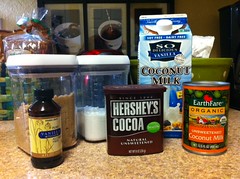
A scrumptious DIY ice cream is easy to make and can be really fun!  We've tried a bunch of types of recipes but like this one the best!  Since we're going somewhat dairy free in our household we made ours with 'So Delicious' brand vanilla coconut milk.  You can use regular milk.

We love making homemade ice cream and haven't purchased store bought stuff in years!  We like how you can control what goes in it and since we're 'semi organic' we like to add as many organic ingredients as we can.  That means every time it's different and awesome!  Another thing that's great is how cheap it is!  Just check out the freezer section at your local store and gasp at how much some people pay for tubs full of chemicals and factory made flavors.  Don't be a sucker!  It's really easy and normally you'll just need to grab extra milk since you may already have the other ingredients.

ice cream 2

Chocolate Ice Cream Recipe:
  • 1 cup unsweetened cocoa powder
  • 2/3 cup granulated sugar
  • 1/2 cup firmly packed brown sugar
  • 1 1/2 cups 'So Delicious Coconut Beverage'
  • 3 1/4 cups (about 2 cans) Coconut milk (not light coconut milk)
  • 1 tablespoon pure vanilla extract

Before starting, make sure you follow your machine's instructions, which usually includes freezing the mixing bowl overnight! 

Place the cocoa & sugars in a bowl & stir. Add the So Delicious and use a mixer or whisk to combine until the solids are dissolved (about 1 min).

ice cream 3

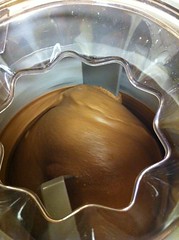
Stir in the coconut milk & vanilla. Turn on ice cream machine & pour the mixture into the frozen bowl.  It takes about 20-30 minutes until it's soft and creamy. At this point it's perfectly edible!  For a firmer texture, transfer to an airtight container & freeze for 2 hours or more. Remove from freezer 15 minutes before serving.

ice cream 4
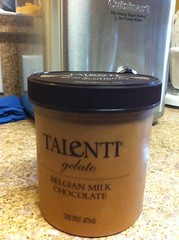
We packaged it in a leftover plastic ice cream
tub from another gelato brand called Talenti.

Enjoy!


Thursday, March 24, 2011

Make It Yourself: Sandwich Bag Dryer


Regardless of what I do we always seem to have plastic sandwich bags.  I'd really like to break our habit of using them and although we have cut back we still end up needing one every now and then.  One thing that helps is washing the ones we do use for dry goods or non-meat products and reusing them.  This way they are at least getting more than one use before being thrown away and we buy them less often.  I didn't have a way to dry them so the dirty ones were stacking up in the sink.  I looked into purchasing a dryer like this one but most of the reviews I read said that eventually the wood will mold or rot because of the water, most are made in China and they can be pricey - some over $20.00 with shipping.  Then I came across this video by Michelle Kaufman - eco home designer.  I had to try it for myself.  I'm happy to say that it works!  I haven't been throwing bags away and have been cleaning and reusing the ones I have.

Supplies:


Wire - I used 16 Gauge Steel Galvanized Wire but Michelles Kaufman used wire coat hangers
Pliers
A few small flower pots
Seeds or plants to go in your pots

Directions:


Start by taking about 1 foot of your wire.  You can either just fold over one end to make a small circle, being sure to tuck in your cut end, or you can get crafty and make a design on the end - I made little flowers.

Next, stick these in your flower pots.

That's it!  After washing a bag, just place it upside down over your metal wire.  The water will drip down into the flower pot and eventually dry.


The cost breakdown:

So, is it worth it to make your own sandwich bag dryer or buy one at the store?

Pliers - free (almost all households have these - if not, just use your hands)
Flower pots / flowers - If you don't have any small pots you can usually buy these at any garden or superstore for less then 2 dollars.  I was able to get individual plants at Ace Hardware for $1.00 a piece which included enough dirt so I didn't have to buy that.  So I estimate that if you got 4 pots at $1.50 each and 4 flowers at $1.00 total this would cost about $10.00
Wire - You can use wire coat hangers if you have them - that's free.  If not, buy a galvanized wire (so it won't rust).  I was able to find this online for $5.49 but you can also buy this at many home improvement stores.

Total the most you would spend on this is $15.49 and depending on how big your flower pots are you should be able to fit about 2-3 wires in each pot leaving you with about 8-12 arms for drying bags.  I used flower pots and flowers I already had so really I only had to buy the wire, but like I mentioned you could just use an old coat hanger and then you wouldn't have to purchase anything.

VS.

Gaiam Countertop Plastic Bag Dryer which is $17.71 on Amazon.


The bottom line: if you bought everything from scratch you may only save a few dollars, however I think that the flower pot idea is more appealing - I have four pots with bag dryer wire in them sitting in my kitchen window and I just love how it looks.  You could even make them more useful by growing herbs to cook with in them.  Also, we have been trying to purchase things made in the USA or avoid buying something made in another country together so being able to make it is really nice.  Again, if you have a few flower pots and a coat hanger you get away with not purchasing anything and then you'd save almost $20.00.  Just another thing you can make yourself!

Tuesday, March 22, 2011

Make It Yourself: Homemade Cards


I really enjoy making homemade cards.  They seem much more personal and nice when they are homemade.  I've been making homemade cards ever since I got a Cricut.  However, you don't need a Cricut to make homemade cards.  A few cards I have made with just paper and scissors, like my Red Hot Birthday Card and Graduation Hat Card.  If you don't have a Cricut or paper crafting machine you can also simply use stamps to make a nice card.  It is nice to be able to personal each card, have them handy when you realize at the last minute you need one and they are cheaper then store bought cards.  My mom often sends us cards she makes using just blank cards and stickers.

The cost breakdown:

Pack of 50 blank cards and envelopes: $9.92 Amazon.com
5 packs of 10 sunflower stickers (Sticko):  $1.29 per pack = 5.16 Scrapbook.com
Markers - free

Use one sticker on the front of each card and then write or print with a computer what you intend the card is for, i.e. Happy Birthday!,  Celebrate!,  Congratulations!, Get Well Soon... etc.   This will make 50 cards at the cost of roughly $15.08.  That's about $0.30 a card.

VS.

I found this as an example of how much you'd pay for a store bought card that is similar.  That's over a dollar in savings per card. I will admit that some of the cards I have made are time consuming and also probably close to the price of store bought cards in supplies however I use a lot of my left over or miscellaneous paper supplies for my cards that would otherwise be thrown out.  Blank cards aren't that expensive to make though and are easily customizable - I don't think you can beat a homemade card.

Thursday, March 17, 2011

Make It Yourself: Suet Feeder Plugs


I love my birds.  They are fun to watch on Sunday mornings with a cup of coffee and I always have my eye open for a species I haven't seen yet.  A moving present we got from my mom when we first moved into our house was a woodpecker suet plug feeder.  These are great for woodpeckers that cling and so far it has attracted nuthatches, tufted titmouse, downy woodpeckers and red-bellied woodpeckers.  The birds like it so much that they go through the plugs weekly and it was getting expensive buying refills.  I opted to try and make my own.  It was much easier and less messy than I thought it was going to be, plus very cost effective and is actually fun to make!  A fair warning:  after smelling the peanut butter, seeing the flour and oats you may be tempted to also make a batch of cookies when you are done making suet.


Ingredients:


4 cups of crunchy peanut butter
4 cups of lard
8 cups of quick cook oats
8 cups of corn meal
4 cups of flour


Directions:


In a large bowl, melt peanut butter and lard together until smooth.  I did this in the microwave, but you can also do it over the stove.


After they are melted, add corn meal, flour, and oats.  Add any extra nut pieces or raisins at this point too.


Stir and mix until well blended.


Using an old plug container or your hands, mold some of the mixed suet into round plugs.  Pop out of container and wrap in wax paper.


I wrapped 3 plugs together each wax paper roll because my feeder has 3 plugs and then I can just grab a wax wrapper and be good to go.  Put the wrapped plugs into a large freezer bag and freeze until ready to put into the feeder.  You can also use this recipe to make suet cakes just freeze them into square cakes using free hand or an old suet cake container. 


The cost breakdown:

This is what I paid at the store:

Kroger brand 4 lbs/64 oz) of Peanut Butter (7.12 cups) = $5.79 or $0.81 per cup
Kroger brand 100% Whole Oats Quick Cook 42 oz (7.5 cups) = $2.99 or $0.40 per cup
Kroger brand Yellow Corn Meal 24 oz (4.69 cups) = $1.00 or $0.21 per cup
Gold Medal White Flour 5lbs (20 cups) = $2.35 or $0.12 per cup
Armour Lard 40 oz (5.44 cups) = $4.49 or $0.83 per cup

Total it cost $11.92 to make my batch of suet and that made me 53 plugs which totals to about $0.22 per plug.

VS.

Peanut Delight Suet Plugs (4 pack) = $2.39 This is about $0.60 per plug.

If I bought 53 plugs at this price it would cost $31.80.  That's a savings of $0.38 per plug. or $19.88 per batch of homemade suet!  If you go through it as much as I do, it's much more economical to make your own!

Tuesday, March 15, 2011

Make It Yourself: Breakfast Granola


This is a combination of several of my favorite granola recipes that I love.  It's so nice to be able to make a large batch of this and have it in the pantry ready for breakfast or a snack.

Ingredients:

3 1/2 cups rolled oats
1/2 cranberries
1/2 cup raisins
1/4 cup shelled sunflower seeds
1/4 cup flax seeds
1/4 sesame seeds
1 teaspoon ground cinnamon
1 teaspoon ground ginger
1/2 cup light olive oil
1/2 pure maple syrup
1/2 local honey

1. Mix together oats, cranberries, raisins, sunflower seeds, flax seeds, cinnamon, and ginger.


2. Once mixed, add oil, syrup and honey.

3. Mix very well.

4. Evenly spread onto a large baking pan that is lined with aluminum foil.

5. Bake at 300ºF for 30-40 minutes until it starts to become fragrant and is slightly golden in color. Don't over cook!


6. Let cool for 5 minutes then break off into pieces or crumble.  Store in a airtight container.


I'm not sure if it's cheaper to make granola at home than it is to buy it pre-made at the store but I assume it is.  Even if it isn't, or close to the same price, I enjoy making granola because I can add whatever I want to it (nuts, dried strawberries, etc), or whatever I have extra in the pantry.  I also like that that I can control what type of sugar goes into our cereal.  Of course, this year I've been able to make some with our own maple syrup which has been wonderful and it's so nice to be able to use that and know that we aren't eating granola with high fructose corn syrup.  Not only is is great for our family but a few years ago my mom made several batches of her homemade granola for Christmas presents which I think I may have to do this year.

Thursday, March 10, 2011

Make It Yourself: Drain De-Clogger


We have 3 cats and 2 humans in this house and drains seem to clog overnight here.  In our last apartment we had a septic tank so I had to find a more natural way to unclog sink drains then with the store bought chemicals.  I'm not sure where I got this recipe but it works.  I've used it for over 2 years now to unclog sink drains and haven't had to buy any of the store stuff which is nice since that stuff is hard on septic systems and pipes and probably shouldn't be allowed in the water system at all anyway.

Ingredients:

Baking soda
White vinegar
Boiling water


Directions:

1. If unclogging a bathroom sink, take the stopper out.  Make sure all the water is drained from the sink.

2. Fill the drain with baking soda.  I usually use about 1/4 to 1/2 a small box to do this.  Shove it down the drain if you have to using a long spoon.  Really pack it in.

3. After baking soda is packed in drain, dump 1/2-3/4 of a cup of vinegar in the sink.  It will start to foam up and eat the baking soda.  Allow the vinegar to 'bubble' and foam its way down the drain.  Be patient - this can take awhile.

4. When you don't hear the bubbling anymore, flush the sink with a kettle full of boiling water.  It will take a minute but your drain should run smoothly after the boiling water is gone.  Run your sink and test it out.

Note:  Sometimes for a bad clog, I will repeat steps 2 and 3 twice before adding the boiling water.


The cost breakdown:

1 gallon of white vinegar - $1.99
16 oz box of baking soda - $1.00
Boiling water - free

If I estimate high by saying that I'll use 8 oz of baking soda and 1 cup of vinegar per drain de-clog that costs about $0.62 per application.

VS.

Draino Foam Clog Remover - $7.50

These prices are based on our local supermarket and don't included taxes, but if you use homemade drain clog remover as opposed to the store bought you could save almost $7.00 per application.  That's a lot!

Be sure to join us next week were I'll be shifting gears from cleaning supplies to food items that you can make yourself!

Tuesday, March 8, 2011

Make It Yourself: Vanilla Meyer Lemon Tooth Powder


For the last 6 months or so we have been testing out natural and or organic toothpastes from the supermarket.  Some of them have been great but all of them have been expensive.  Super expensive.  And I swear they are less oz then regular toothpaste because they only seem to last about three weeks.  I've thought about making our own but was weary of using glycerin which most toothpaste recipes call for.  Then I came across this post from Chiot's Run by Susy.  Oh how badly I want to try this!  It sounds so easy and yummy and cost affective!  We plan on making some next go around and I can't wait.  I asked Susy if she would be willing to share the recipe as a guest blogger on Make It Yourself Month and she said yes.  Be sure to visit Chiot's Run where she blogs about all kinds of things including more make-it-yourself items like homemade crackers and hard cider!


Here's Susy from Chiot's Run:

Vanilla Meyer Lemon Tooth Powder

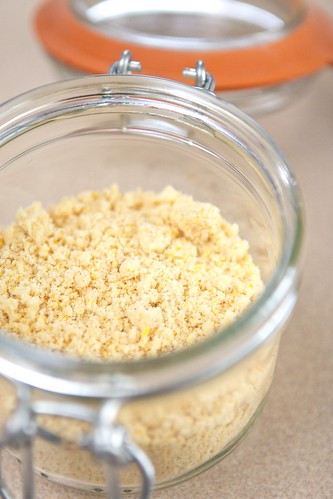
I blogged about making homemade toothpaste last October. That recipe used vegetable glycerin, which Mr Chiots and I weren't really fond of. After we used up that batch we've been using tooth powder instead, which we like much better. I've been trying different recipes, cinnamon tooth powder being our favorite so far. Since it was time to make another batch, I decided lemon would be a wonderful flavor for the coming spring months. I made up a batch of Vanilla Meyer Lemon Toothpaste. It smells heavenly, like a delicious lemon cookie. The recipe for toothpowder is basically the same, you can add various essential oils and spices to customize it to suite your tastes.

Homemade Vanilla Meyer Lemon Tooth Powder

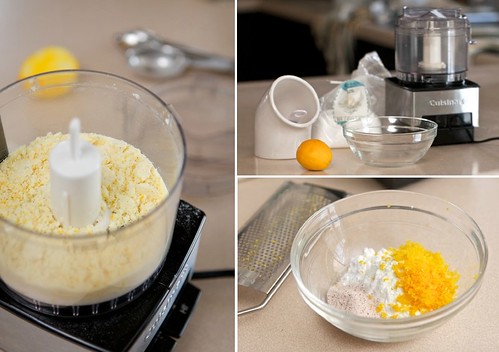
LEMON VANILLA TOOTH POWDER
4 Tablespoons baking soda (I use aluminum free)
2 teaspoons fine sea salt
1 Tablespoon of grated lemon peel (from one lemon)
10 drops of vanilla

Stir together ingredients and whir in a food processor to pulverize the lemon peel. Store in a small jar. Put small amount on toothbrush and enjoy and non-toxic delicious tooth brushing experience! As with all tooth brushing make sure to rinse well after brushing, especially with the citrus as it's slightly acidic. Rinsing well gets rid of the acid.

For my cinnamon recipe I simply omit lemon peel and vanilla and add 1 teaspoon of ground cinnamon. Sometimes I also add a few drops of peppermint essential oil.


Homemade Vanilla Meyer Lemon Tooth Powder

This recipe is simple to make and really inexpensive as well. An SLS free non-toxic toothpaste can run $4-10 per tube, since this costs less than 50 cents per batch you're saving a bundle!

Homemade Vanilla Meyer Lemon Tooth Powder

I really enjoy learning to make things for myself so I don't have to rely on heading to the store when I need things like toothpaste, brown sugar, bread, crackers and other things. All you have to do is keep a few staples in your pantry and you can save a bundle buy learning to make your own.

Have you ever made homemade toothpaste or powder?

I can also be found at Chiot's Run where I blog daily about gardening, cooking, local eating, beekeeping, and all kinds of stuff. You can also find me at Not Dabbling in Normal and Simple, Green, Frugal, Co-op, and you can follow me on Twitter.